
ZAGROŻENIE LAWINOWE

2026-11-11 16:38
2026-11-12 20:00
Pokrywa śnieżna jest na ogół dobrze związana i stabilna. Wyzwolenie lawiny jest na ogół możliwe jedynie przy dużym obciążeniu dodatkowym w nielicznych miejscach na bardzo stromych lub ekstremalnych stokach. Możliwe jest samoistne schodzenie małych i średnich lawin.
Na ogół dogodne warunki. Należy zachować szczególną ostrożność na stokach bardzo stromych lub ekstremalnych.


 Brak zagrożenia lawinowego.Brak zagrożenia lawinowego.
Pokrywa śniegowa rozłożona nierównomiernie. Zwiększonej ilość przewianego śniegu należy spodziewać się we wszelkich formacjach wklęsłych, pod ścianami oraz w okolicach grani. Pogorszenie warunków lawinowych spowoduje zapowiadany wzrost temperatury i opad deszczu w najwyższych partiach Tatr.
| 2026-11-09 | 2026-11-10 | 2026-11-11 | 2026-11-12 | 2026-11-13 |
1 | 1 | 1 | 1 | 1 |
| Historia | Historia | Historia | Prognoza |
Wednesday, 28 Oct 2026
Published 27 Oct 2026 17:00
Danger level
| ||||||||
Avalanche Problem
|




Beware of wet avalanches and sluffs from new snow!
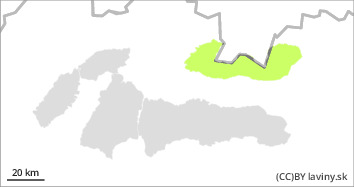
In the Tatra Mountains, above 1,900 meters above sea level, there is a low avalanche danger, Level 1. The risk is very localized and is limited to areas with a higher accumulation of fresh snow (gullies, hollows, beneath rock faces, etc.). Following recent snowfall and given the current warming and sunshine, there will be an increased occurrence of small avalanches and wet-snow slides on steep, exposed slopes. On slopes with grassy or smooth rocky surfaces, smaller sliding (base) avalanches may also occur. Additional loading of the snowpack on steep slopes and in gullies may also trigger small avalanches.
Snowpack
Overnight and on Monday, October 26, between a dusting and 20 cm of new snow fell above 1,250 m above sea level; in areas above 2,000 m, the snowfall exceeded 30 cm in some places. The snow fell as temperatures dropped, but it is currently warming up again; on Wednesday, temperatures will be above freezing at all elevations. The warming will cause the snow to become wet and the snowpack to become unstable. In the highest elevations of the Tatra Mountains, old, icy snow from the September snowfall is present beneath the new snow on northern slopes and in gullies.
Tendency
gradually decreasing in the coming days